


Forgot to Pay Japan NHI? Here’s What Happens

According to Japan's Health Insurance Act and National Health Insurance Act, foreigners who hold a residence card (zairyu card) and are staying in Japan for more than 3 months are legally required to be part of the national healthcare system.
Since the enrollment is mandatory, failing to pay will result in consequences.
In this article, we will explain what happens when you forget to pay your National Health Insurance in Japan and how to resolve & avoid late payments.
Note: This article provides information for residents enrolled in Japan’s National Health Insurance system (Kokumin Kenkō Hoken). If you are enrolled in employee health insurance (Shakai Hoken), payment rules are handled through your employer and are different.
Forgot to pay your National Health Insurance in Japan – what should you do first?
If you forgot to pay your National Health Insurance (Kokumin Kenkō Hoken) in Japan, you should contact your local city or ward office and request a reissued payment slip or pay at the counter.
Missing one payment does not immediately cancel your insurance coverage. However, continued non-payment may lead to penalties and restriction of benefits.
Japan's National Healthcare system

In Japan, it is mandatory to take part in the national healthcare.
The national healthcare system in Japan consists of the Employee Health Insurance (Shakai Hoken) and National Health Insurance (Kokumin Kenkou Hoken).
If you are a full-time employee at a Japanese company, you are already covered by the employee health insurance (Shakai Hoken) provided by the company.
However, if you are not (e.g., student, self-employed, freelancer, unemployed, etc. ), you are legally required to follow the necessary procedures to enroll in National Health Insurance (Kokumin Kenkou Hoken).
How National Health Insurance premiums are determined
The insurance premium each household pays is calculated based on several factors such as income from the previous year (January - December), age, household size, and the local government's rate.
Since calculating the exact amount can be complicated, many local governments provide quick estimation and simulators.
If you are wondering about the total amount and breakdown of your National Health Insurance premiums, it is recommended to check your local government's website.
Coverage of National Health Insurance

When you receive treatment for an illness or injury, you have to present proof of your National Health Insurance coverage, either your My Number card registered for insurance use or your certificate of qualification confirmation, to receive the insurance benefits.
For those under 70 years old, 70% of the medical expenses are covered by National Health Insurance, and they have to pay 30% of the total medical bill.
For those aged 70 to 74, the self-pay portion drops to 20% for most people, though it rises to 30% if the person's taxable income exceeds a set threshold set annually by the local government. Your local city hall can confirm which rate applies to your household.
For those aged 75 and older, coverage moves to a separate program called the Late-Stage Elderly Medical Care System, but the self-pay logic is similar: 90% of medical expenses are covered and the person pays 10%. However, if this person earns income equivalent to that of average working adults, he or she has to pay 30% of the total medical bill.
80% of the medical expenses are covered for those under 6 years old (before elementary school), and their parents need to pay 20% of the total medical bill.
Normally, you pay an amount according to your self-pay percentage (10%-30%) at the medical institution counter.
The High-Cost Medical Care Expense System (Kogaku Iryo-hi Seido) is a system where, if your monthly medical expenses are high, the amount that exceeds a certain self-pay limit will be reimbursed. The person who wishes to use this system must apply at the counter of their local government office.
What happens when you miss your due date
According to guidance published by the Ministry of Health, Labour and Welfare, municipalities are responsible for collecting National Health Insurance premiums and handling overdue payments, reminders, and benefit restrictions.
Since enrollment in National Health Insurance is mandatory for those who are not part of the Employee Health Insurance, it has similar characteristics to tax. As long as the person is registered as a resident in the city or town, whether a Japanese or a foreigner, the person is obligated to pay the National Health Insurance premiums every month.
If you fail to pay the insurance premiums by the deadline, there will be consequences.
Reminder and notification stage: If you fail payments, the city or ward office sends reminder notices by phone, letters, and sometimes home visits. A late fee is added to the arrears.
Less than a year overdue: Since December 2024, Japan no longer issues the traditional paper health insurance card. Most residents now use either their My Number card registered for insurance (マイナ保険証) or a certificate of qualification confirmation (資格確認書), issued automatically without needing to apply. If you're behind on payments for under a year, you'll typically keep receiving a normal certificate of qualification confirmation, often with a shorter validity period, while the city follows up on the arrears.
More than a year overdue: Your record may be flagged so that, instead of your normal certificate of qualification confirmation, you receive a restricted version tied to a special medical expense benefit (資格確認書の特別療養費版). In practice, this means you pay 100% of medical expenses at the counter and apply afterward to have the insured portion refunded, though any outstanding arrears are usually deducted from that refund first.
More than 1.5 years overdue: Insurance benefits may be suspended entirely, meaning you pay the full amount out of pocket with no path to reimbursement until arrears are resolved.
Eventually, continued non-payment can lead to seizure of assets, including salary, bank account deposits, savings, and property.
Additionally, from 40 years old, it is also required to pay for the nursing care insurance premiums. There are penalties for these if you fail to pay by the deadline.
Note: Many municipalities set the monthly deadline as the last day of each month, with the following business day applying if that date falls on a bank holiday. Exact deadlines, including the December due date, are set by each city or ward, so confirm the schedule with your local office rather than assuming it matches every municipality.
How this affects your visa if you're a foreign resident
If you're a foreign resident living in Japan, unpaid National Health Insurance premiums are set to carry a consequence beyond the penalties above. Starting around June 2027, the Ministry of Health, Labour and Welfare and Japan's Immigration Services Agency plan to link municipal insurance payment records with immigration data.
This means:
It applies when you apply to renew or change your visa — not to a currently valid residence status. Falling behind today doesn't cancel your visa immediately, but it can surface as a problem the next time you file a renewal or status-change application.
This is expected to apply across nearly all residence status categories, from work visas to spouse and dependent visas, not a narrow list.
Permanent residency applications already face closer scrutiny of payment history, and this is expected to tighten further. Even a short delay in payment has, in practice, contributed to permanent residency denials.
The standard for denial is arrears plus a failure to respond to payment demands — not simply having ever missed a payment. If you inquire at your city or ward office and set up an installment plan, you're taking exactly the step that protects a future application.
If you're a foreign resident and have any outstanding National Health Insurance arrears, treat inquiring with your local city hall as time-sensitive, even if your current visa isn't due for renewal soon.
👉 Read also: Japan Immigration News: What Every Foreign Resident Needs to Know (August 2026)
If you forgot to pay your NHI bill and already paid 100% at the hospital
If you missed your National Health Insurance (NHI) payment and had to pay the full medical cost at a hospital or clinic, you may still be able to receive a reimbursement later.
If you were enrolled in National Health Insurance at the time of treatment, you can apply for a refund of the insured portion of the medical fee at your local city or ward office.
In general, you will need to submit:
the original medical receipts
a completed reimbursement (refund) application form
your bank account details
your National Health Insurance information
After your application is reviewed, the portion normally covered by National Health Insurance (for example, 70% for most people under 70 years old) will be transferred to your bank account.
Please note that reimbursement procedures, required documents, and processing time may vary by municipality. It is recommended to contact your local city or ward office as soon as possible after receiving treatment.
Missing a payment does not automatically mean you permanently lose your insurance benefits. In many cases, benefits can still be applied retroactively once your payment status is corrected.
How to pay for National Health Insurance premiums
There are multiple ways to make a payment. For a full walkthrough of each option, including step-by-step instructions for paying at a convenience store, see our dedicated guide: How to Pay National Health Insurance in Japan.
Options include:
Bank transfer (auto pay): Apply at your local city office by submitting the bank transfer request form
Payment slip: Bring the payment slip to the bank, financial institutions, post office, local city office, and convenience store
Cashless payments: Scan the payment slip's barcode and pay with a payment app (e.g., PayPay, dPay, etc.)
Credit card: Scan the payment slip's QR code with the payment system "Mobile Register" and pay with a credit card (may or may not be possible depending on your credit card)
Deduction from pensions: If the household head is enrolled in National Health Insurance, every household member on the plan is between 65 and 74, and a few other conditions are met (including a minimum annual pension amount), premiums are automatically deducted from the household head's pension payments instead of billed separately. This stops the fiscal year the household head turns 75, since coverage then shifts to a separate program for that age group. Ask your city or ward office if your household qualifies, or if you'd rather switch to bank transfer instead.
Insurance premium reduction for special cases

If you cannot pay the insurance premiums due to unavoidable or special circumstances, do not hesitate to contact and consult with your local government office.
There are payment reductions and special consideration for those who are in unavoidable circumstances.
Separate from case-by-case hardship exemptions, most municipalities also apply an automatic, income-based reduction to the flat-rate portion of National Health Insurance premiums, based on your household's total income from the previous year.
This typically works in three tiers: households under the lowest income threshold get a 70% reduction, the next tier gets a 50% reduction, and the next gets a 20% reduction.
If you've already filed your resident tax return, this reduction is usually applied automatically without a separate application. Households with children under 6 often receive an additional reduction on top of this. The exact income thresholds are set by national tax law but recalculated by each municipality every fiscal year, so check your city or ward office's current figures rather than relying on last year's numbers.
Beyond the automatic tiered reduction, here are cases where you are eligible for a separate case-by-case reduction or exemption:
-
Reduction and exemptions in the event of a natural disaster or financial hardship
Households that have suffered from a natural disaster (floods, fires, earthquakes, etc.)
Households that have experienced a significant decrease in income due to retirement, business closure, illness, death, etc., and are recognized as being in financial difficulty
The details of both the automatic tiered reduction and the case-by-case exemptions vary depending on the local government, so consult with them as soon as possible when it is financially difficult to pay the insurance premiums.
Prevention tips for overdue payments
If you are in a financially difficult situation due to disasters or unavoidable reasons, reach out to the local city hall for a reduction or an exemption.
If you tend to forget to pay the monthly insurance premiums because you are busy, you can apply for a bank transfer monthly auto payment at your local city hall.
However, if you do not have a Japanese bank account, using reminder tools and bill-payment services will help you avoid missing the deadline.
MailMate: Bilingual cloud mailbox with bill-payment service
MailMate provides various kinds of services tailored to expats living in Japan.

MailMate will help you with...
Digitalizing Japanese mail with translation so that you can check your mail from anywhere in the world through an online dashboard
Dealing with non-English speaking organizations & paying bills on your behalf
Incorporation and establishment of a branch office in Japan
Finding a professional business address in Japan
Property management in Japan
Being a tax representative and a domestic point of contact... and more!
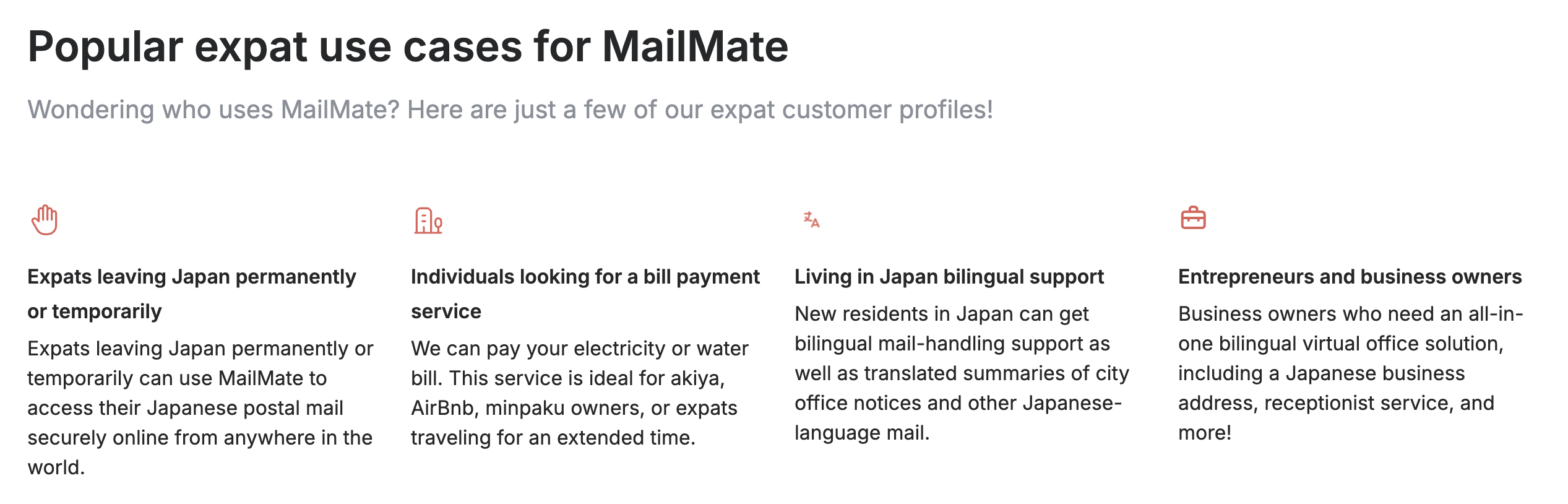
Check out our website to see the ways we can help you!
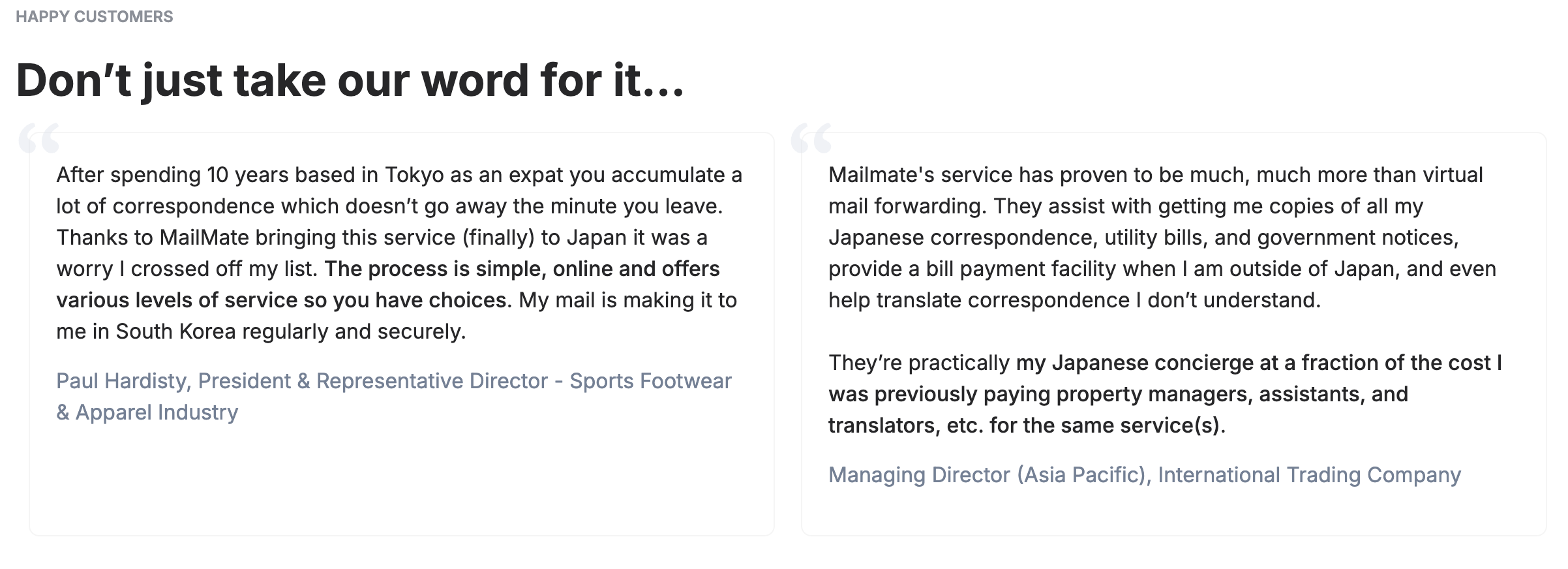
MailMate has been helping foreign residents in Japan and consistently receives excellent feedback!
Frequently asked questions

Here are some of the frequently asked questions about National Health Insurance premiums in Japan.
Q: What happens if I forget to pay for National Health Insurance in Japan?
If you have a residence card (zairyu card), are staying for more than 3 months in Japan, and are not working for a company full-time, you are legally required to enroll in the National Health Insurance. If you fail to pay by the deadline, there will be reminder notices by phone, letters, and visits. Also, the late fee will be added. Eventually, your National Health Insurance will be suspended, and your assets will be seized.
Q: Can I pay for National Health Insurance at a convenience store?
Yes. You can bring your NHI payment slip to the convenience store cash register and pay. However, you cannot pay at a convenience store if the payment due date has passed. Also, if the payment slip doesn't have the convenience store barcode or the payment amount exceeds ¥300,000, you cannot pay at the convenience store.
Q: I received a notification about unpaid National Health Insurance. What should I do first?
If you receive a notification for unpaid National Health Insurance premiums, contact your local city or ward office immediately and confirm the outstanding amount. You can usually pay using a reissued payment slip or at the municipal counter. Responding quickly to a notification helps prevent additional penalties and further administrative procedures.
Q: Can I still use my health insurance after receiving a late payment notification?
In most cases, receiving a late payment notification does not immediately cancel your National Health Insurance coverage. However, continued non-payment after repeated notifications may lead to restricted benefits or a switch to a restricted certificate of qualification confirmation that requires paying medical costs upfront. It is strongly recommended to make inquiries with your local city or ward office to confirm your current coverage status.
Q: How much of my medical bill does National Health Insurance cover if I'm between 70 and 74?
If you're between 70 and 74, National Health Insurance typically covers 80% of your medical expenses, so you pay 20% at the counter. This can rise to a 30% self-pay share if your taxable income is above a threshold set annually by your local government. Your city or ward office can tell you which rate applies to your household for the current fiscal year.
Q: Do I still get a physical National Health Insurance card?
No. Since December 2024, Japan has stopped issuing new physical health insurance cards. Most residents now present either their My Number card registered for health insurance use, or a certificate of qualification confirmation, which your city or ward office sends automatically if you haven't registered a My Number card. If you're behind on National Health Insurance payments by more than a year, you may receive a restricted version of this certificate that requires paying the full amount at the medical institution and applying separately for reimbursement.
Q: Where should I make inquiries if I forgot to pay my health insurance in Japan?
All inquiries about unpaid National Health Insurance premiums should be made to the National Health Insurance section at your local city or ward office. They can confirm your payment history, issue new payment slips, and advise you on available payment options or reductions.
Q: Will missing one payment affect my visa or residence status in Japan?
Missing a single National Health Insurance payment does not directly affect your residence status today. However, this is changing: starting around June 2027, Japan's Immigration Services Agency plans to check National Health Insurance and pension payment records as part of visa renewal and status-change screenings. Foreign residents with unresolved arrears may, in principle, be denied a renewal or change, though this isn't automatic — officials are expected to weigh the amount and duration of the arrears, whether a payment plan is in place, and whether the person is making a good-faith effort to resolve it. If you have any outstanding balance, contacting your city or ward office now to set up an installment plan is the safest way to protect a future visa renewal.
Q: I forgot to pay and left Japan temporarily. Will I still receive notifications?
Yes. Notifications for unpaid National Health Insurance premiums are usually sent to your registered address in Japan. If you are outside Japan and cannot receive mail, it is important to make inquiries with your municipality to avoid missing important notices and deadlines.
Q: Can I set up a payment plan if I do not have enough money to pay at once?
Yes. Contact your local city or ward office's National Health Insurance counter, either by phone or in person, and explain your situation, such as a job loss, illness, or a significant drop in income. Here's what typically happens at the counter:
Bring your certificate of qualification confirmation, your premium notification, or any letter about the arrears — anything with your reference number helps staff pull up your account quickly.
Staff will ask about your household's financial situation, including your current income, when you fell behind, and how much you can realistically pay each month going forward.
They'll often restructure the payment schedule to lower each installment, for example, spreading what was normally 10 payments across 12, rather than reducing the total amount owed.
You'll be asked to sign a written pledge acknowledging the total arrears and agreeing to the new payment schedule and amounts.
Note that an installment plan spreads out payment, it doesn't reduce what you owe. If you also qualify for an income-based reduction or exemption, ask about that separately, since it's a different process that actually lowers the amount due. Availability and exact procedures vary by municipality, so confirm the details with your specific city or ward office.
Q: What details do I need to bring when asking my city hall about arrears?
Bring your residence card, your National Health Insurance notification or certificate of qualification confirmation, and any payment slip or letter you've received about the arrears. Your city hall can look up the total amount owed, the due dates you've missed, and your income details from the previous year, which they'll use to calculate a realistic monthly installment amount. Bringing your bank account details also speeds things up if you're switching to automatic bank transfer going forward to prevent future missed payments.
In closing

It is legally required for every resident, regardless of their nationality, to be part of the national health care program in Japan.
If you work for a Japanese company full-time, you are automatically covered by the Employee Health Insurance. However, if not, you must enroll in National Health Insurance.
There will be serious consequences, and eventually seizure of assets and negative visa outcomes, if you fail to pay by the deadline.
To avoid potential problems, it is important to inquire with your local government office, choose the best payment method that suits you, and seek additional help.
MailMate can help you in various ways, as the services provided are tailored to expats who live in Japan. Check out our website to learn more!
Read also:
花太多時間處理日本郵件?
虛擬郵箱 + 翻譯服務每月僅需 3800 元起。30 天退款保證。