


The Best Furniture Shops in Japan


Are you looking for popular furniture shops among Japanese locals?
Japan's furniture market ranges from budget-friendly chains like Nitori and LOWYA starting from under ¥10,000 per piece, to high-end handcrafted brands like Karimoku and ACTUS where individual pieces can exceed ¥100,000.
This article will introduce you to the best and the most popular furniture shops in Japan across different price ranges.
There is a wide range of furniture styles available in Japan, so we will also provide tips on choosing the right furniture to suit your space and tastes later in the article.
Best furniture shops in Japan
Here are the top furniture shops in Japan.
Name |
Style |
Price Range |
Modern Deco |
Natural / Modern |
Affordable |
Nitori |
Natural |
Affordable |
Lowya |
Natural / Modern |
Affordable |
Tokyo Interior |
Modern / Minimalism |
Affordable - Normal |
Muji |
Japanese Minimalism |
Normal |
Journal Standard Furniture |
Vintage |
Normal - higher end |
a.depeche |
Industrial / Vintage |
Normal - higher end |
Loop |
Asian Resort |
Normal - higher end |
Karimoku |
Japanese Wood |
High end |
ACTUS |
Scandinavian / Original Design |
High end |
IKEA Japan |
Natural |
Affordable |
Note: Prices as of April 2026. Verify current prices on each store's official website before purchasing.
Modern Deco
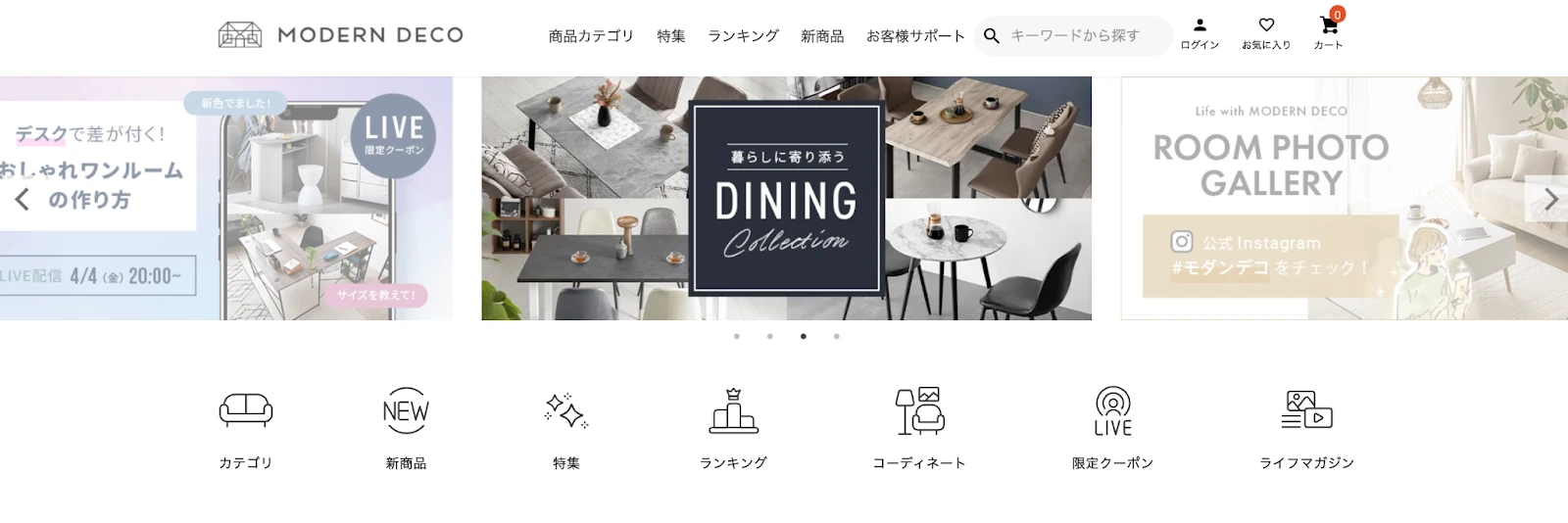
Source: Modern Deco Online Store
Modern Deco is an online furniture shop. They have a wide range of furniture styles available, from Scandinavian natural style to modern designs.
Their furniture is very affordable, and a 1LDK can be furnished for less than 100,000 yen.
[Price Example]
Sofa: ¥12,999 ~
Dining table: ¥8,999 ~
Nitori
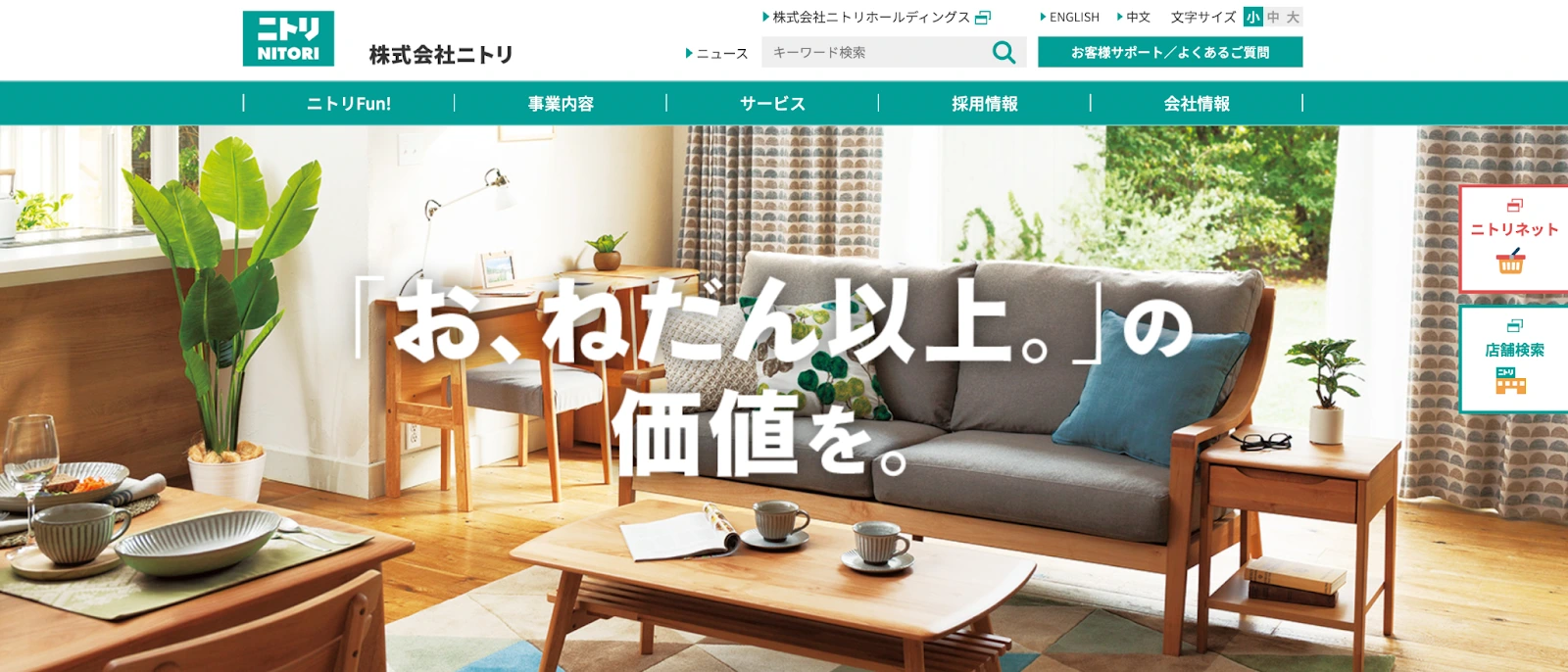
Source: Nitori Official Website
Nitori is one of the most popular and famous furniture stores in Japan and is often called the “Japanese IKEA.” They have over 800 locations in Japan as of 2024, making it the largest furniture retailer in the country.
Its integrated manufacturing and retail model (called the SPA model) is a well-known named concept in Japanese retail analysis.
Since Nitori is located everywhere throughout Japan, you can check the store location for your area. You’ll also be able to check the distance from the nearest station to the store for easy accessibility if you plan to take the train and don’t own a vehicle.
[Price Example]
Sofa: ¥17,990 ~
Dining table: ¥7,490 ~
LOWYA
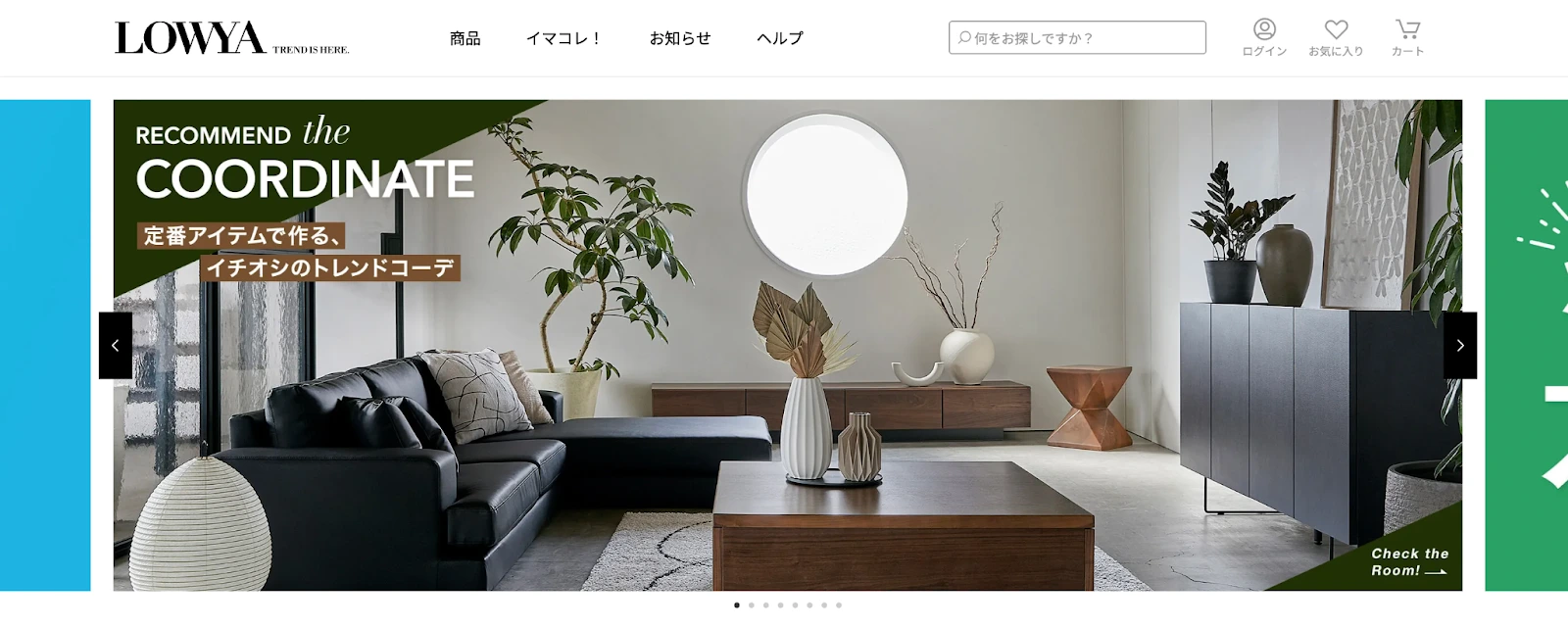
Source: LOWYA Online Store
LOWYA is an online furniture shop, and it is popular among young people because of its design and price.
LOWYA primarily operates online but has opened physical stores in select cities.
[Price Example]
Sofa: ¥19,990 ~
Dining table: ¥10,490 ~
Tokyo Interior
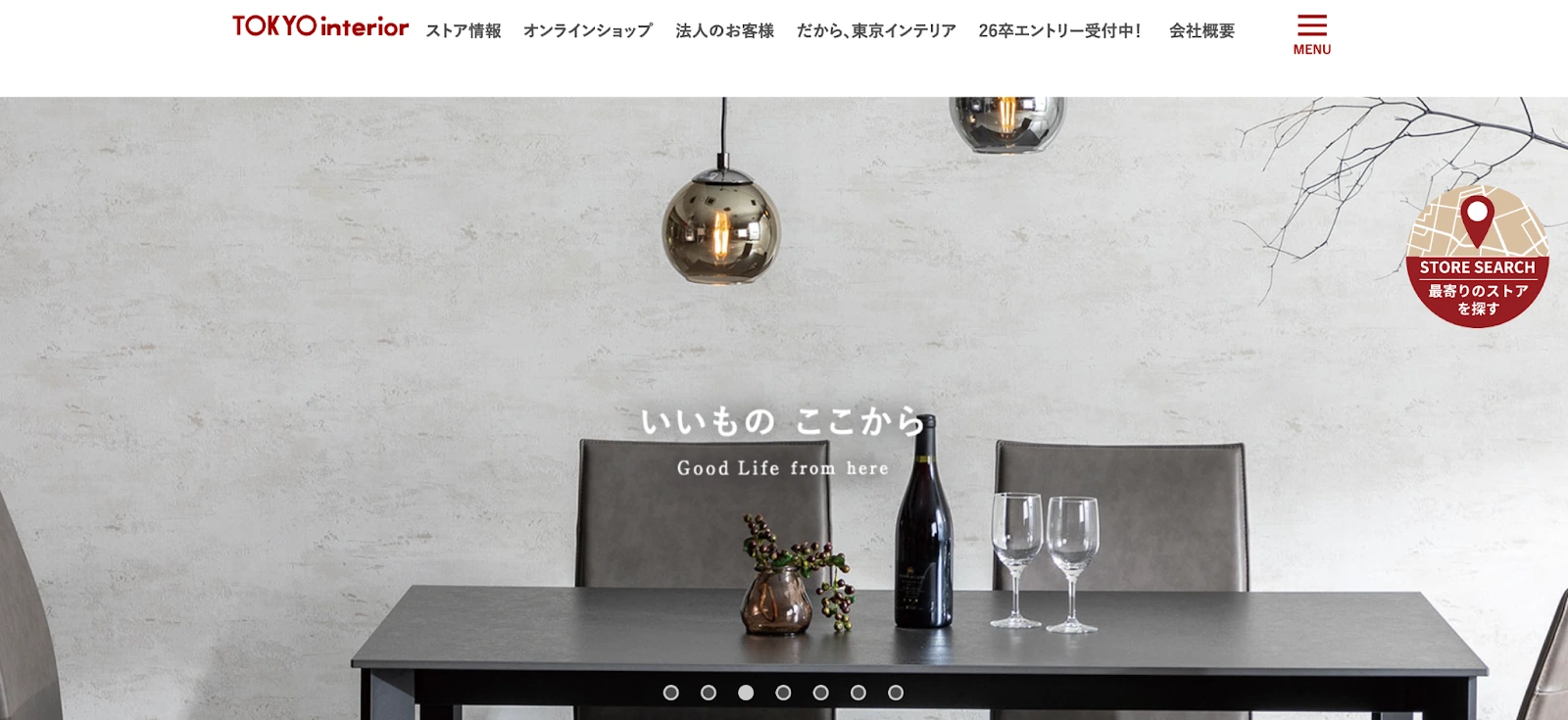
Source: Tokyo Interior Official Website
Tokyo Interior is another well-known furniture store that offers stylish and functional furniture for competitive prices.
You can find a wide range of well-designed items, from premium pieces to more budget-friendly options.
[Price Example]
Sofa: ¥29,800 ~
Dining table: ¥14,800 ~
Muji
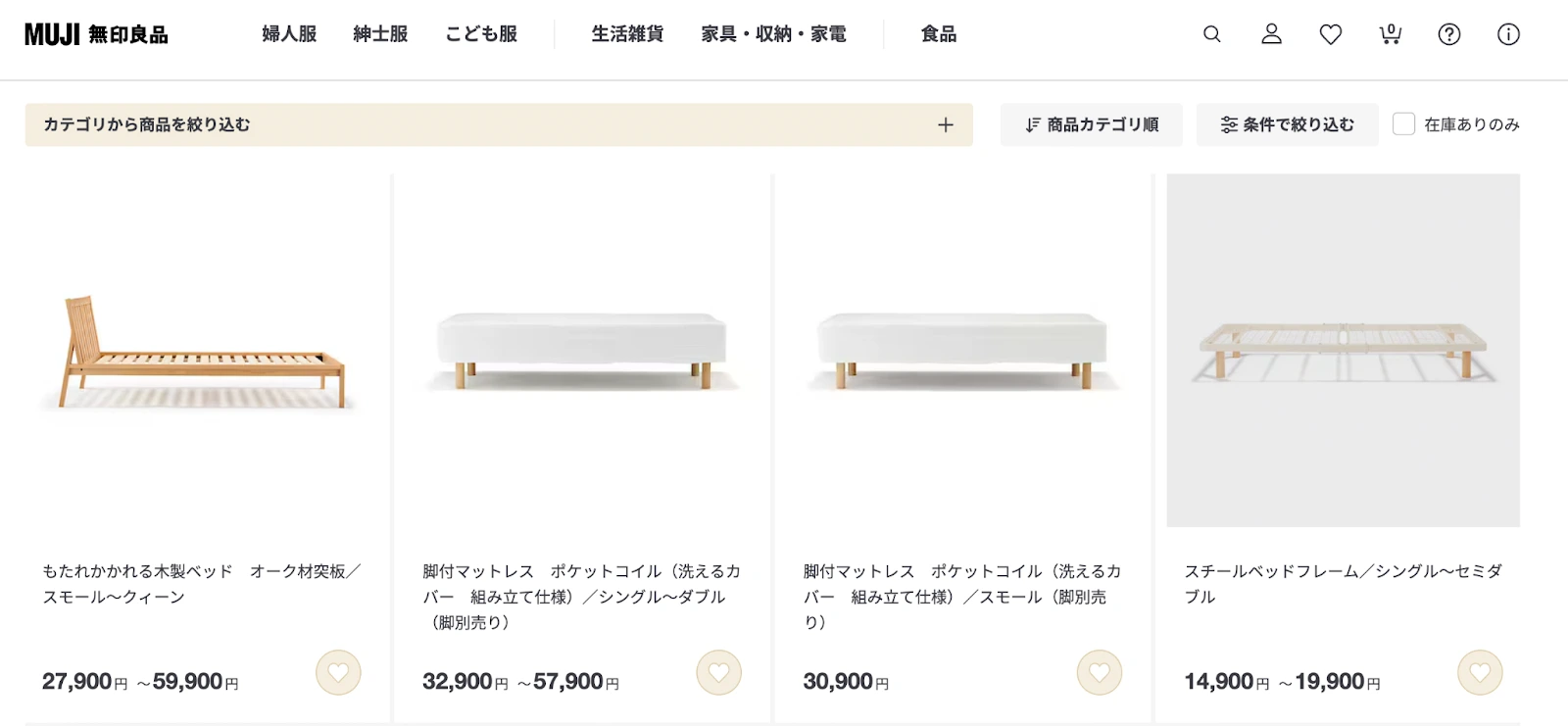
Source: Muji Online Store
Muji furniture is simple and minimalistic, which generally suits Japanese homes. Muji furniture is popular among people who cherish a simple lifestyle, and the furniture is reasonably priced with high functionality.
Many of their furniture is made using natural materials, and the company places a great importance on creating environmentally friendly products.
[Price Example]
Sofa: ¥37,990 ~
Dining table: ¥24,900 ~
Journal Standard Furniture
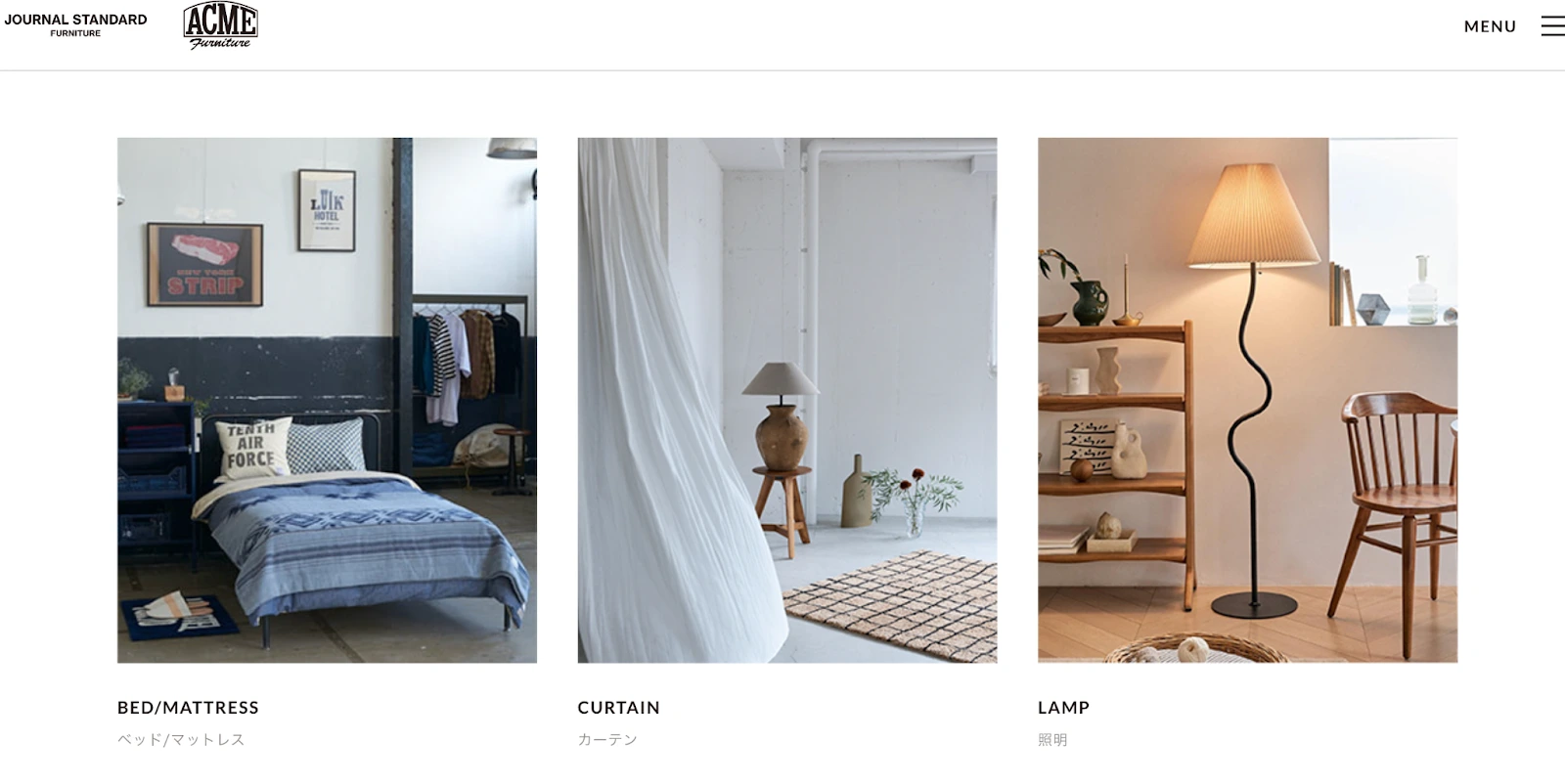
Source: Journal Standard Furniture Online Store
Journal Standard Furniture offers vintage-style furniture made from wood and leather. They have over 10 stores nationwide, mainly in urban areas like Tokyo.
The prices are in the mid-to-high range, but their furniture is made with close attention and has many fans among interior design enthusiasts.
[Price Example]
Sofa: ¥110,000 ~
Dining table: ¥79,200 ~
a.depeche
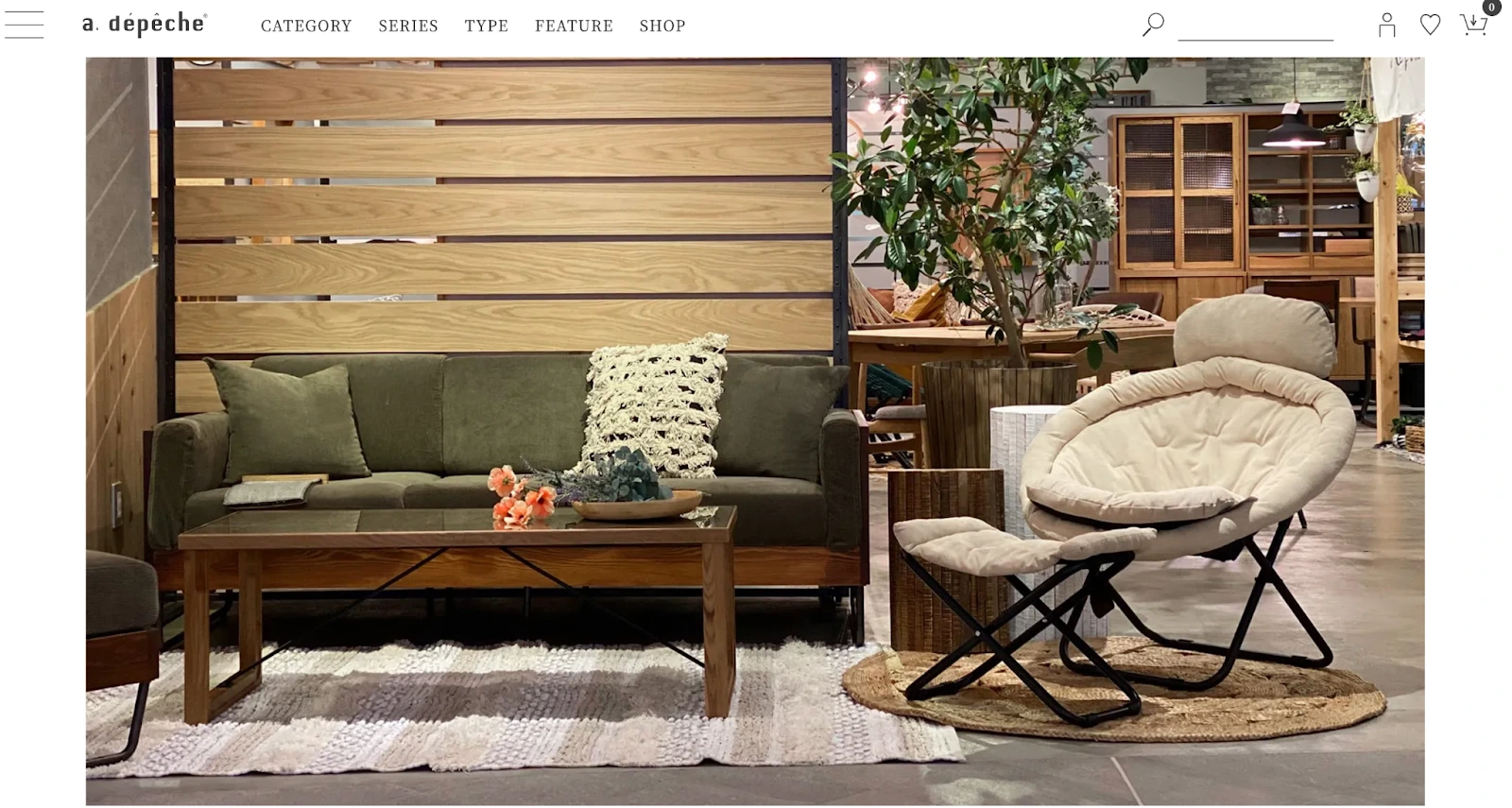
Source: a.depeche Official Website
a.depeche offers industrial / vintage style furniture, and the price is mid-to-high range. They have unique lifestyle goods as well to brighten up your home.
They have around 20 stores nationwide.
[Price Example]
Sofa: ¥132,000 ~
Dining table: ¥62,700 ~
Loop
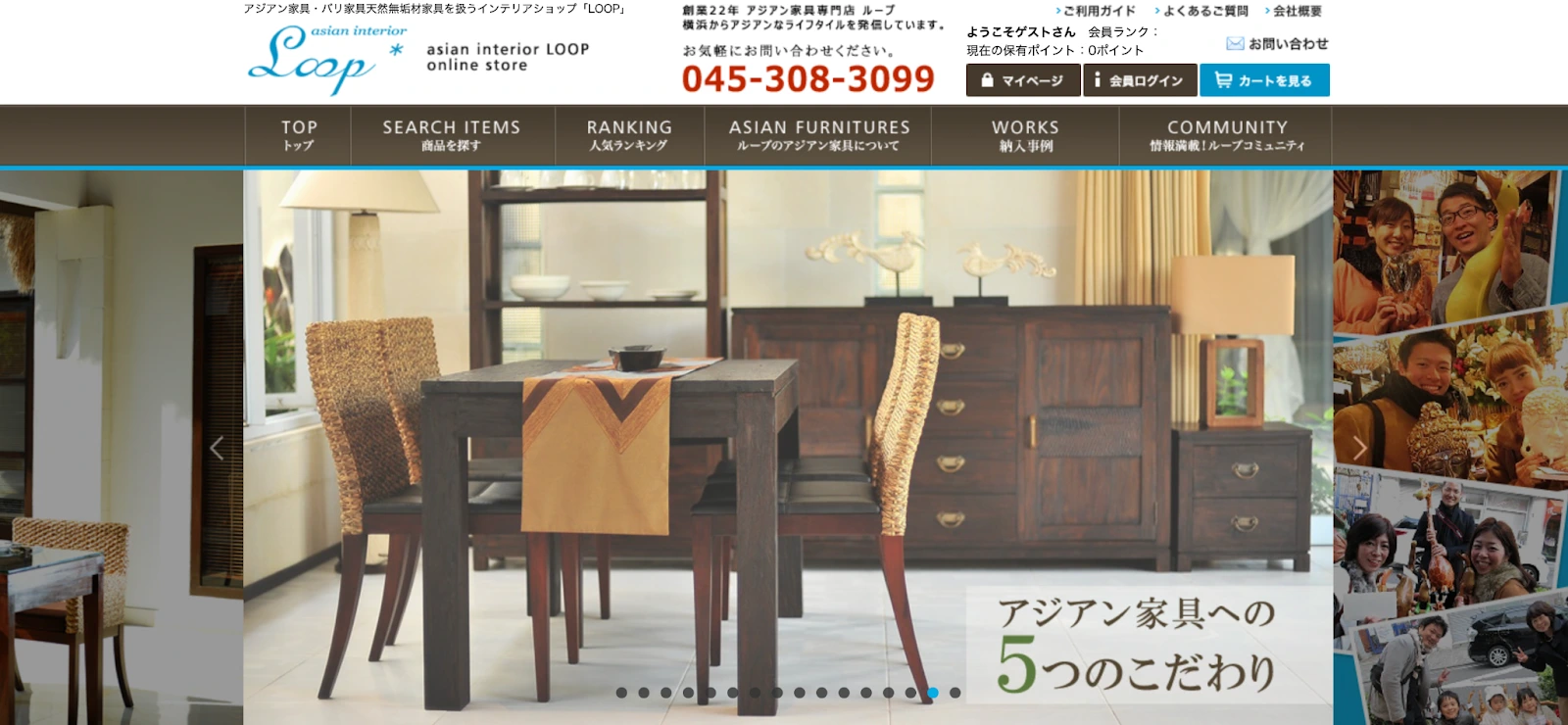
Source: Asian Interior Loop Online Store
Loop offers Southeast Asian resort-style furniture, using materials such as water hyacinth, teak, rattan, etc.
The price is in the mid-to-high range.
[Price Example]
Sofa: ¥112,200 ~
Dining table: ¥62,480 ~
Karimoku
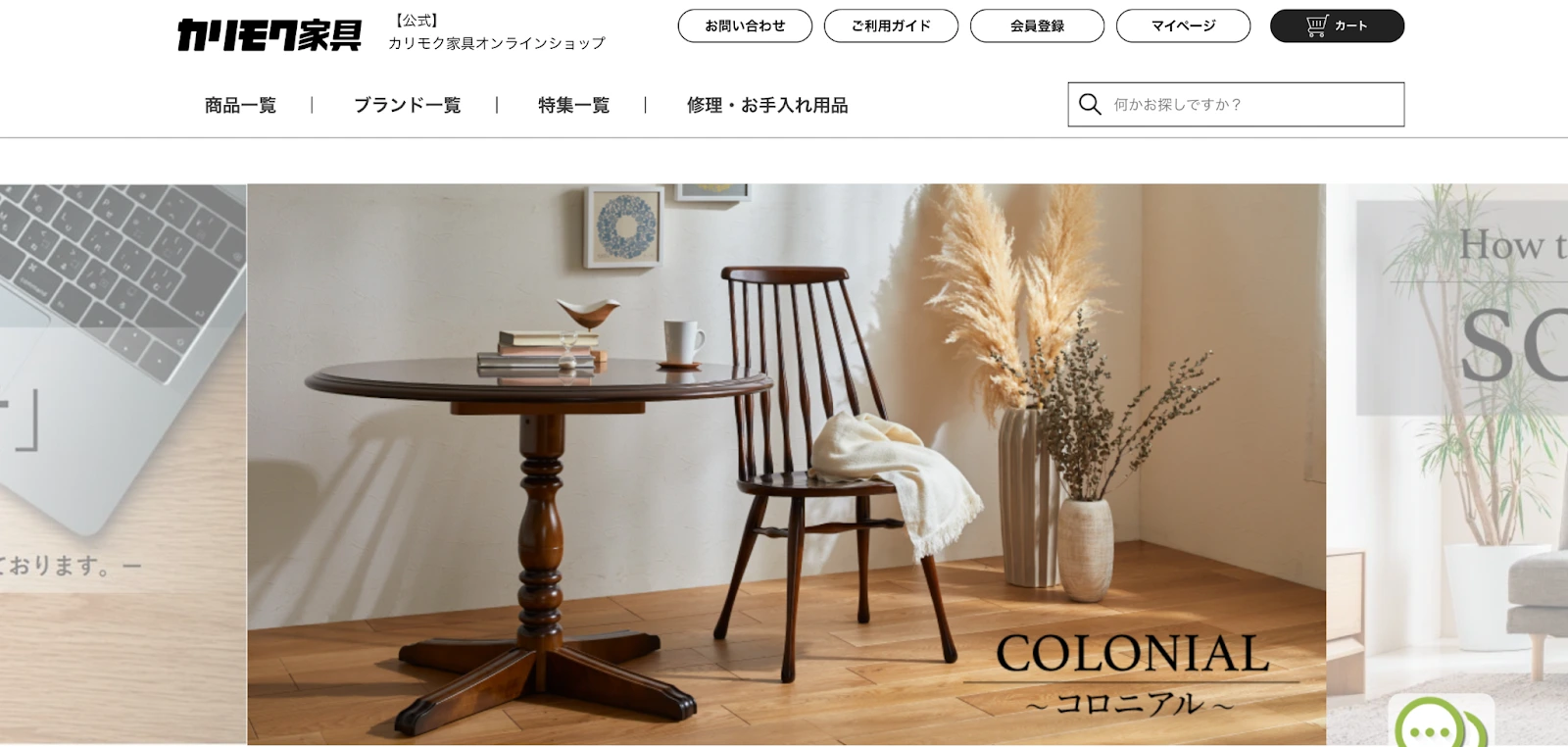
Source: Karimoku Kagu Online Store
Karimoku is a high-end furniture store specializing in high-quality, wooden handcrafted furniture. Their pieces feature a timeless design, using Japanese woods that take between 50 and 100 years to grow, such as oak, chestnut and maple, with the predominant timber being oak from Japan.
Their philosophy is to combine the history of traditional Japanese craftsmanship with modern design and technology, making their furniture a perfect fit for homes in Japan.
[Price Example]
Sofa: ¥100,760 ~
Dining table: ¥68,200 ~
ACTUS
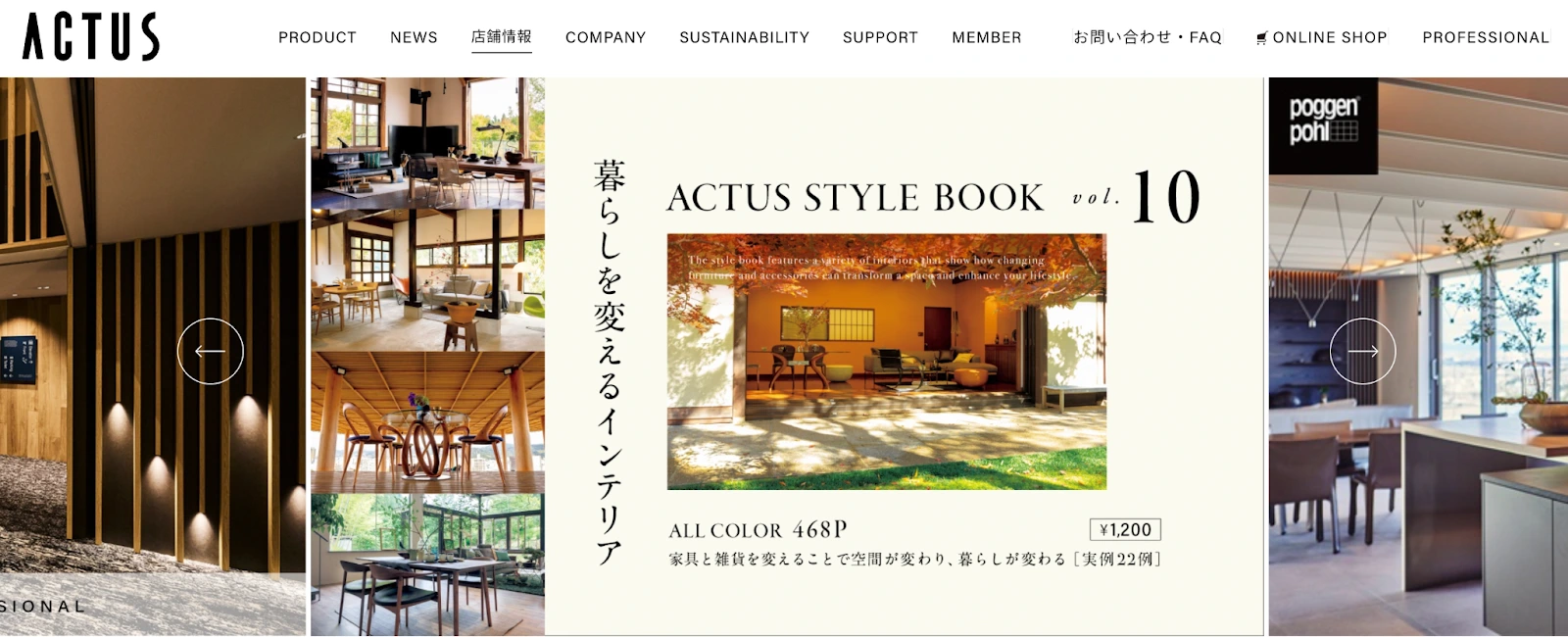
Source: ACTUS Official Website
ACTUS was founded in 1969 and began by importing Nordic furniture but has since developed its own original designs manufactured in Japan and Southeast Asia. It is popular among Scandinavian-Japanese style lovers.
The design and quality are very high, and a popular brand among interior design enthusiasts as many of them are pieces of art. Many people buy their furniture as a special centerpiece of the house to make the impression and quality of the room better.
[Price Example]
Sofa: Around ¥100,000 ~ ¥4,000,000
Dining table: Around ¥70,000 ~ 1,500,000
IKEA Japan
IKEA operates stores in major urban areas across Japan, including three Tokyo-area locations in Tachikawa, Funabashi, and a compact urban format store that opened in Harajuku in 2024. For expats familiar with IKEA from their home countries, it offers an immediately recognizable shopping experience with English-language support on the website and in-store navigation.
Note that IKEA Japan prices run approximately 10 to 15% higher than European locations due to import costs. Delivery from IKEA to central Tokyo addresses is available but adds ¥3,990 to ¥9,990 depending on item size.
Price examples: Sofa from ¥34,990, dining table from ¥14,990
Simplify your life in Japan with MailMate

Are you an expat or a new homeowner in Japan? If so, consider using MailMate’s services to simplify your life in Japan!
For expats
Virtual mailbox service: MailMate provides you with a physical mailing address in Japan. They receive your mail, scan the contents, and upload them to a secure online dashboard, allowing you to access your mail from anywhere in the world.
Bill payment assistance: Beyond just handling your mail, MailMate can assist in paying utility bills and other essential payments on your behalf, ensuring that your services remain uninterrupted.
Bilingual support: MailMate offers support in both English and Japanese, bridging any language barriers and ensuring clear communication.
For property owners
Virtual mailbox: Receive your Japanese mail digitally with English summaries & an interactive mail concierge.
Tax agent service: Appoint us as your tax representative, and let us handle the paperwork and payments for fixed property tax and real estate acquisition tax.
Bill pay support: MailMate will receive and pay your property tax bills and utility bills without you having a Japanese bank account.
Domestic point of contact: Register MailMate as your domestic point of contact at the time of your property purchase.
Local point of contact: MailMate will be your local point of contact for your condo, building association, and utility set-up.
Internet setup: Get help with fiber optic internet set-up at your property (the service includes monthly internet fees).
MailMate offers various price plans tailored to your needs.
Check out MailMate’s many services and price plans that are tailored to simplify the expat life in Japan!
Where to buy second-hand furniture in Japan
Buying second-hand furniture is one of the smartest moves you can make when furnishing a home in Japan, and it is especially popular among expats. Japan has a strong culture of caring for possessions—a philosophy sometimes called mottainai (もったいない), meaning "what a waste"—which means used furniture here is typically in significantly better condition than in many other markets. You can often find near-mint pieces at 30 to 70% below new retail price.
Here are the main options, from the most expat-friendly to the most budget-friendly.
Sayonara Sales (Facebook Groups)
Sayonara sales are the first stop for most expats furnishing a new home in Japan. These are Facebook groups where foreigners who are leaving Japan sell off their furniture and belongings quickly before departing. Because sellers are motivated by speed rather than price, deals are often exceptional, and communication happens in English. Search Facebook for "Tokyo Sayonara Sale," "Osaka Sayonara Sale," or your city name combined with "sayonara sale" or "garage sale" to find the relevant groups for your area. The main limitation is that you typically need to arrange your own pickup, so having access to a rental van or a friend with a vehicle makes a big difference for larger pieces.
Mercari (メルカリ)
Mercari is Japan's largest peer-to-peer resale app and has the highest volume of used furniture listings of any platform in the country. It is listed on the Tokyo Stock Exchange and connects millions of private sellers with buyers nationwide. For large items like sofas and dining tables, Mercari now offers a dedicated large-item shipping service called Tanomel Bin (梱包・発送たのメル便) in partnership with Yamato Home Convenience, which handles collection and delivery without requiring you to arrange transport yourself. The app interface is in Japanese, but the visual layout and translation tools make navigation manageable for non-Japanese speakers. Mercari works best once you have a Japanese address and phone number.
Jimoty (ジモティー)
Jimoty functions similarly to Craigslist or Gumtree and is the platform for connecting with locals in your immediate neighborhood.
It is particularly useful for large, heavy items that are difficult to ship, since the standard practice on Jimoty is local pickup, meaning a buyer from your area collects the item themselves. Jimoty has a very active free section where items are listed at zero yen.
If you are patient and willing to arrange your own collection, Jimoty is one of the best sources of free or near-free furniture in Japan. The site interface is in Japanese, but Google Translate handles it reasonably well.
Second-hand chain stores
Japan has a well-developed network of national second-hand retail chains that buy, inspect, and resell used furniture at fixed prices, often with short-term return policies.
The main options for furniture are Off House, which focuses on home goods, furniture, and appliances and has locations across Japan; 2nd STREET, which has over 850 stores nationwide and an English online store where you can filter for furniture and buy online; and Treasure Factory, which specializes in larger furniture pieces and appliances and offers in-store delivery services.
These chains are more accessible than peer-to-peer platforms for expats who are not yet comfortable navigating Japanese apps, since store staff can assist in person and items are clearly priced and condition-graded.
Practical tips for buying second-hand furniture in Japan
Measure your doorways and hallways before purchasing anything large. Japanese apartments often have narrow entrances, and a sofa that fits your living room may not fit through the front door. Check whether your building has an elevator and what its interior dimensions are before committing to a large piece.
For delivery on peer-to-peer platforms like Mercari and Jimoty, always clarify who arranges and pays for transport before completing a purchase. For chain stores like Off House and Treasure Factory, delivery services are typically available for an additional fee.
If you are leaving Japan and want to sell your furniture, the same platforms work in reverse. Listing on Jimoty and Sayonara Sales groups before your departure date is the most efficient way to clear a home without paying Japan's sodai gomi (粗大ごみ) oversized waste disposal fees, which apply to most large furniture items.
How to save money on furniture in Japan
Furnishing a home can be expensive. Here are tips for saving money while keeping the quality of life and aesthetics of the house.
80/20 rule: Spend money on 20% of the furniture (centerpieces) and go budget-friendly on the remaining 80%
Outlet: Check out outlet products to get stylish furniture at affordable prices
Online furniture shopping: Shopping online often offers a discount
Furnish gradually: I know it’s tempting, but don’t try to furnish everything all at once
Compare prices: Be patient and compare prices of both online and offline options
👉Related article: How To Get Rid of Furniture and More In Japan: The Ultimate Guide
Finding the right furniture for your space
Whether your new home is an apartment in Tokyo or a detached house in the countryside, choosing the right furniture involves balancing style, functionality, and space efficiency.
Measure your space before purchasing the furniture
Consider multi-functional furniture if your home is a small apartment
Incorporate Japanese aesthetics by using natural materials and simple designs for balancing style
Final tips for furniture shopping in Japan
Keep the following tips in mind when you are shopping for furniture in Japan:
Be patient and check multiple stores to compare prices and styles
Search for outlet products to get high-quality furniture at lower prices
Find stores that match your personal taste (Japanese minimalism, Vintage style, Industrial style?)
Consider online furniture shopping if you want convenience and a wide range of products, and maybe some discounts
Keep an eye on seasonal sales for the best deals
👉Related article: 10 Akiya Furniture Items You Will See In Your Japanese Home
Frequently asked questions
What is the cheapest furniture store in Japan?
Nitori is widely considered Japan's most affordable furniture chain for quality basics, with sofas starting from approximately ¥17,990 and dining tables from ¥7,490. Online retailers Modern Deco and LOWYA offer competitive prices with sofas starting below ¥20,000. For the lowest prices overall, second-hand furniture through platforms like Jimoty or expat community sayonara sales groups can offer significant savings, sometimes 50 to 70% below retail.
Is IKEA in Japan?
Yes. IKEA operates stores in Japan including locations in Tokyo's Tachikawa, Funabashi, and a compact urban format store that opened in Harajuku in 2024. Prices are slightly higher than IKEA stores in Europe due to import costs, but the product range and assembly-required format are broadly similar to international locations.
What is the Japanese equivalent of IKEA?
Nitori is most commonly compared to IKEA and is often called the "Japanese IKEA." Like IKEA, Nitori offers affordable, flat-pack furniture with a natural aesthetic across hundreds of locations nationwide. However, Nitori operates an integrated manufacturing and retail model and produces most of its own products, whereas IKEA sources from a global supplier network.
Can foreigners shop at Japanese furniture stores?
Yes. Most major furniture chains in Japan including Nitori, IKEA, Muji, and ACTUS operate English-language websites and accept international credit cards. Physical stores are generally navigable without Japanese language skills, particularly at chains like Nitori where products are clearly displayed in showroom settings. Muji's minimalist labeling and IKEA's visual instruction manuals are also accessible without Japanese reading ability.
Which Japanese furniture brand is best for small apartments?
Muji and LOWYA are particularly well-suited to small Japanese apartments. Muji specializes in multi-functional, space-efficient designs using natural materials, and its modular storage systems are popular for maximizing limited floor space. LOWYA offers stylish compact furniture at accessible price points. For very small spaces, Nitori's range of furniture designed for 1LDK and studio apartments is extensive and specifically marketed toward single-person households.
In closing
By exploring Japan’s diverse furniture market, you can discover high-quality pieces that match perfectly with your home and lifestyle.
When you find it challenging to navigate your new life in Japan, MailMate is here to help.
Whether you are an expat who just moved to Japan or a property owner in Japan, MailMate offers comprehensive help.
Founded in 2019, MailMate has simplified property ownership for foreigners living abroad and is an increasingly popular option recommended by users and well-known industry figures.

Spending too long figuring out your Japanese mail?
Virtual mail + translation services start at 3800 per month. 30-day money-back guarantee.